 ST ROOFING& CONSTRUCTION LLC(347) 858-0693ST ROOFING& CONSTRUCTION LLC(347) 858-0693
We help homeowners navigate the insurance claims process and get fair settlements for roof and storm damage.
Dealing with insurance claims after roof damage can be overwhelming. The paperwork, negotiations, and back-and-forth with adjusters can stress anyone out. ST Roofing & Construction LLC makes the process easy. We have extensive experience helping homeowners navigate insurance claims and get fair settlements for their roof damage.
From the initial inspection to the final repairs, we guide you through every step of the claims process. We document damage thoroughly, work directly with your insurance adjuster, and ensure you understand your coverage. Our goal is to help you get the compensation you deserve to restore your home.
Important: We never guarantee claim approval - final decisions are made by the insurance company. But we do everything in our power to present a strong, well-documented claim.
Thorough photo documentation of all damage to support your claim with visual evidence.
Comprehensive roof inspection identifying all damage, both visible and hidden.
We meet with your insurance adjuster on-site to ensure nothing is missed.
Detailed estimates that match insurance industry standards for fair compensation.
We inspect your roof thoroughly, documenting all damage with photos and detailed notes.
We guide you on how to file your claim and what information to provide to your insurance company.
We meet with the insurance adjuster on-site to ensure all damage is properly documented and acknowledged.
Once your claim is approved, we complete the repairs according to the approved scope of work.
Missing shingles, lifted flashing, and structural damage from strong winds and storms
Dented shingles, damaged flashing, and granule loss from hail storms
Damage from trees, branches, and other debris falling on your roof
Damage from ice dams causing water backup and infiltration
Get expert guidance through the claims process. Free roof inspection!
Click any photo to view full size.


ROOF INSPECTIONS · REPAIRS · CLAIM DOCUMENTATION
Does your roof look like these photos? Call ST Roofing for a roof inspection, repair options or photographs and written findings you can share with your insurance company. Clear documentation records the visible condition and can support the review of a claim. The cause of damage and coverage require assessment; photos alone do not guarantee approval.
You do not need to wait for an active leak to request an inspection. We can assess missing or torn shingles, explain repair options and document what we find.
Call (347) 858-0693 Request an inspection →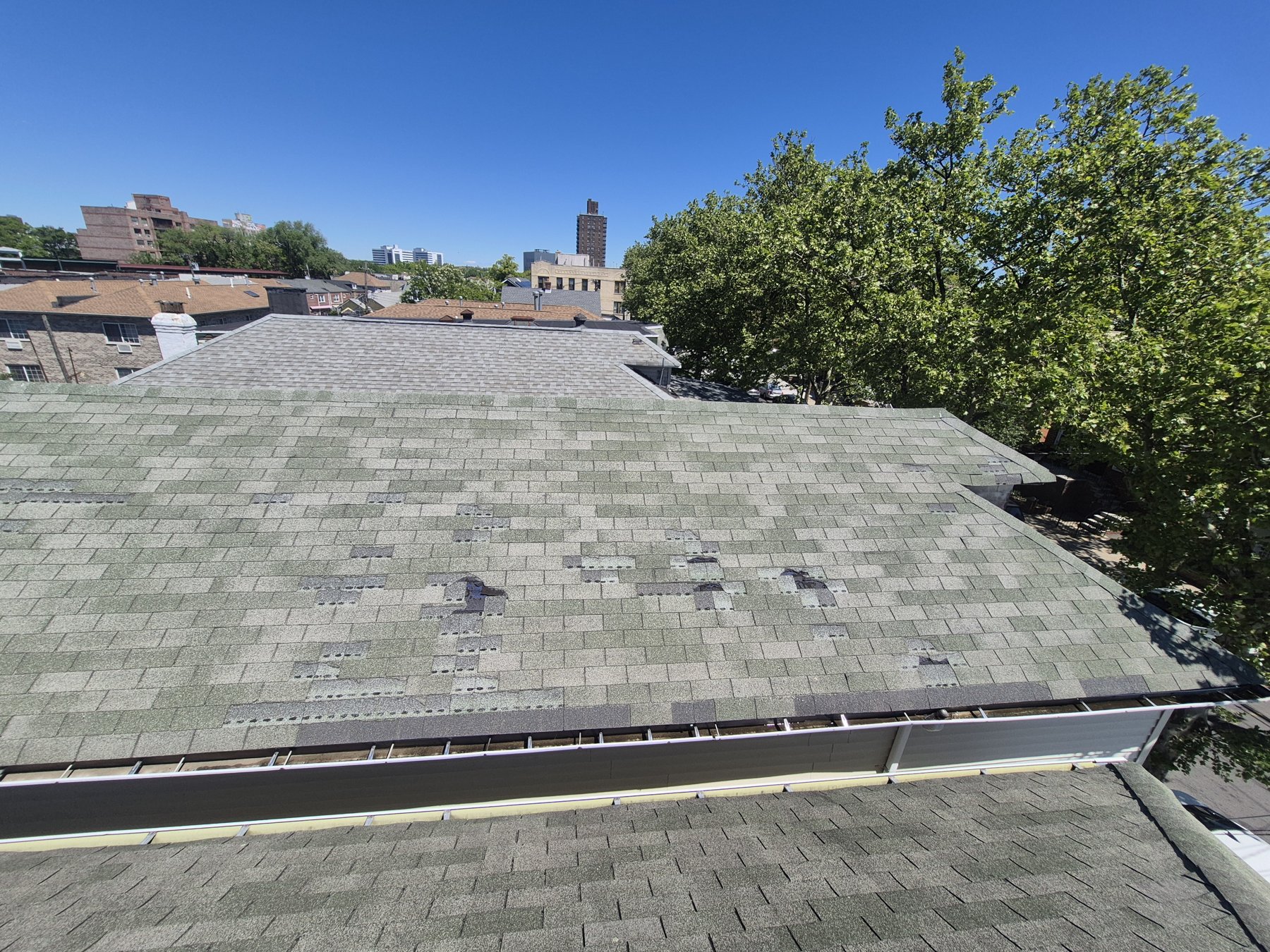
This overall view records multiple areas with missing shingle tabs. Wide photos help show how the affected areas are distributed across a roof slope.
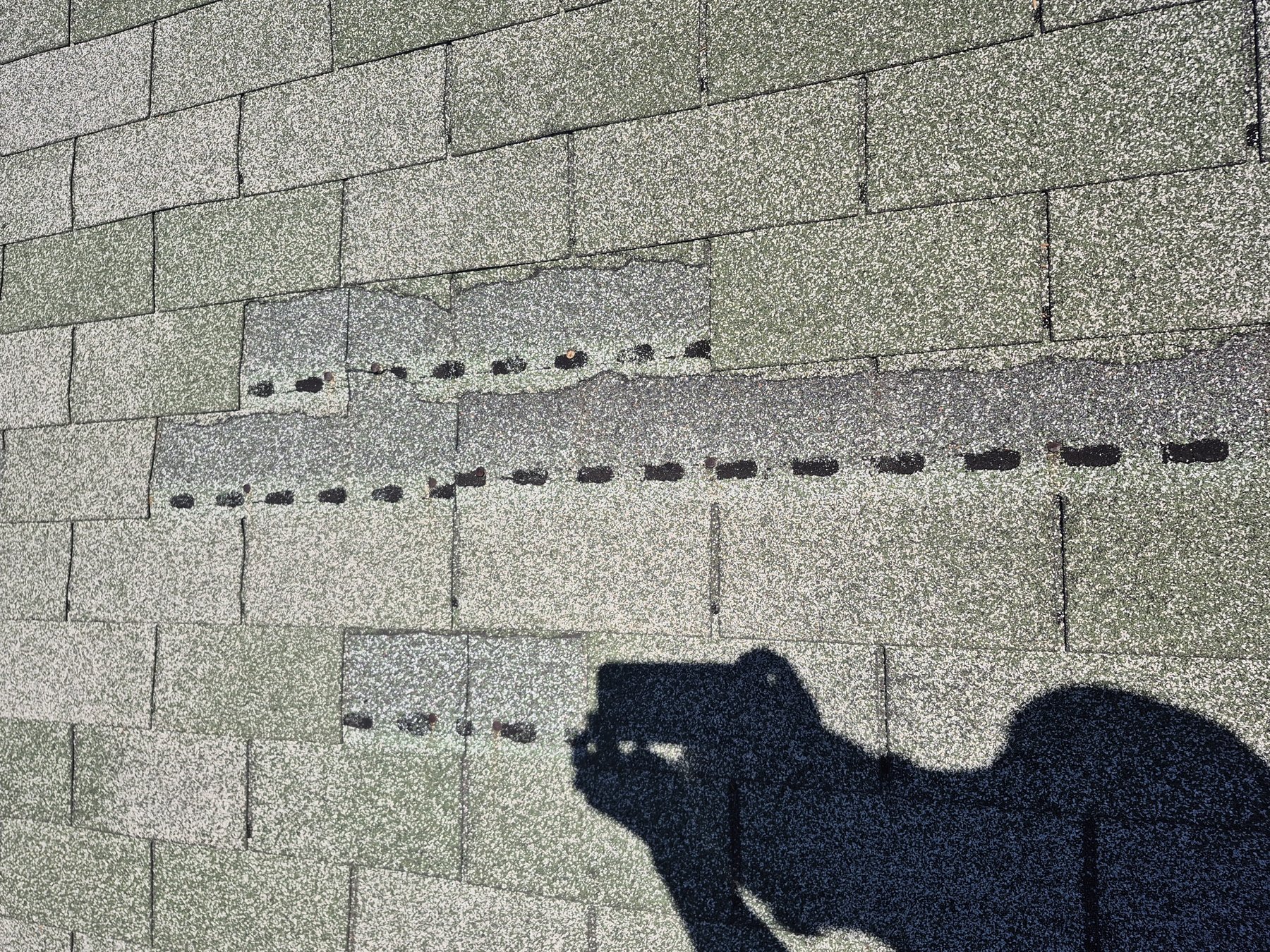
Close-up photographs record the exposed fasteners and remaining shingle material. These details help explain the observed condition in a roof inspection report.
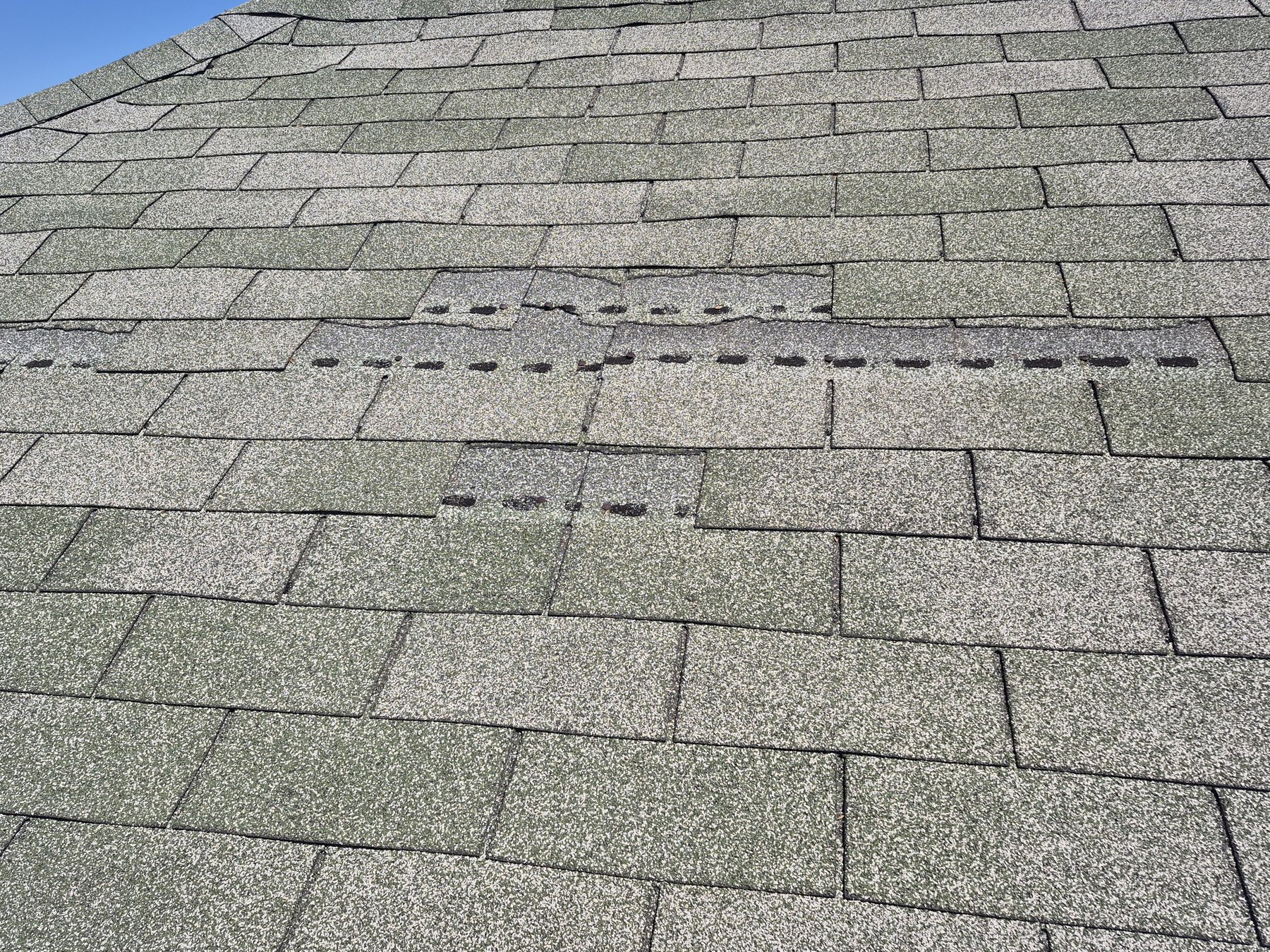
This view shows several affected shingle rows together. Recording both the surrounding roof and the individual damaged areas provides context for a repair estimate.
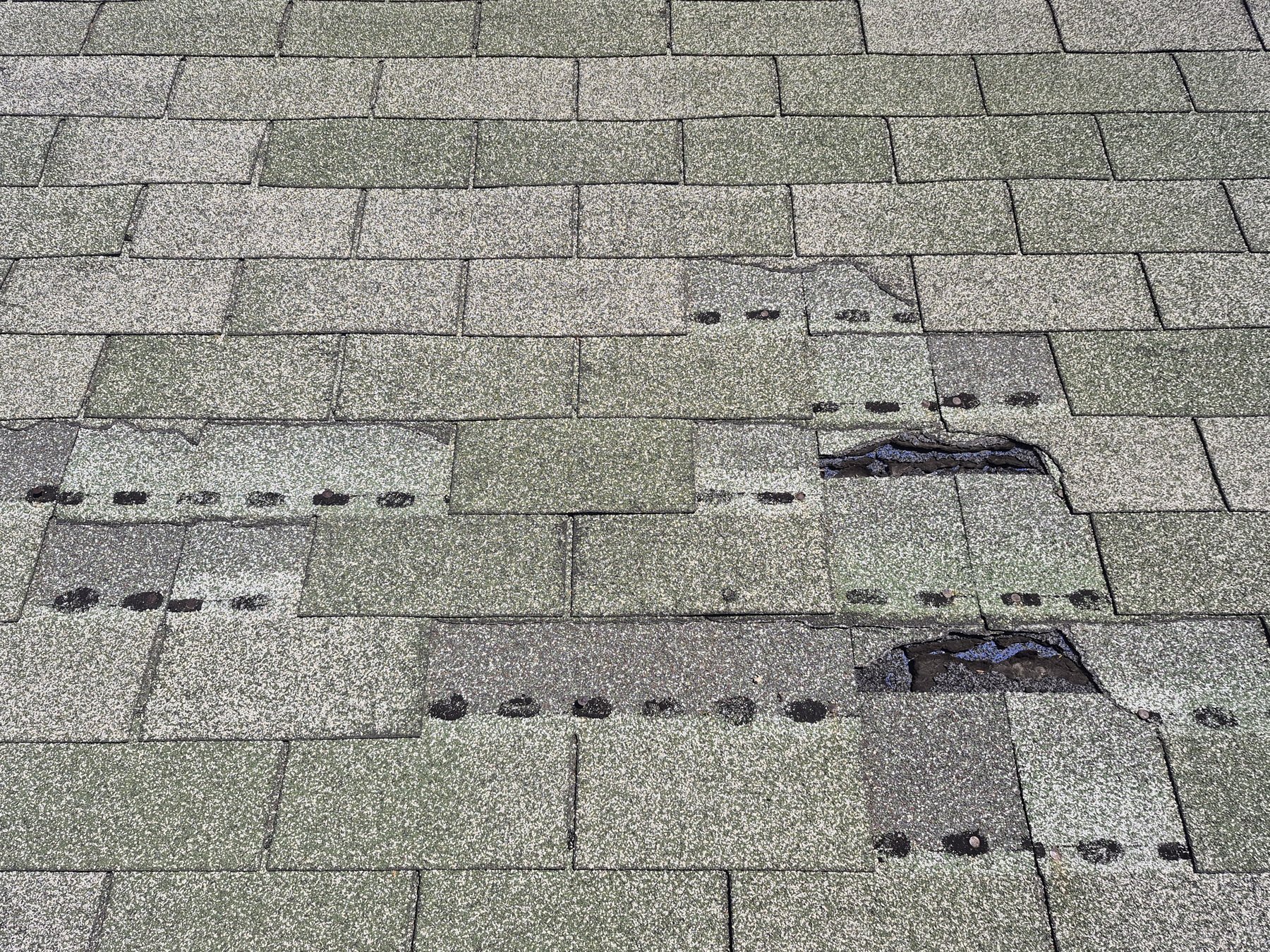
Missing and torn shingle sections leave underlying material visible. An inspection helps assess the affected area and whether temporary protection or repairs are needed.
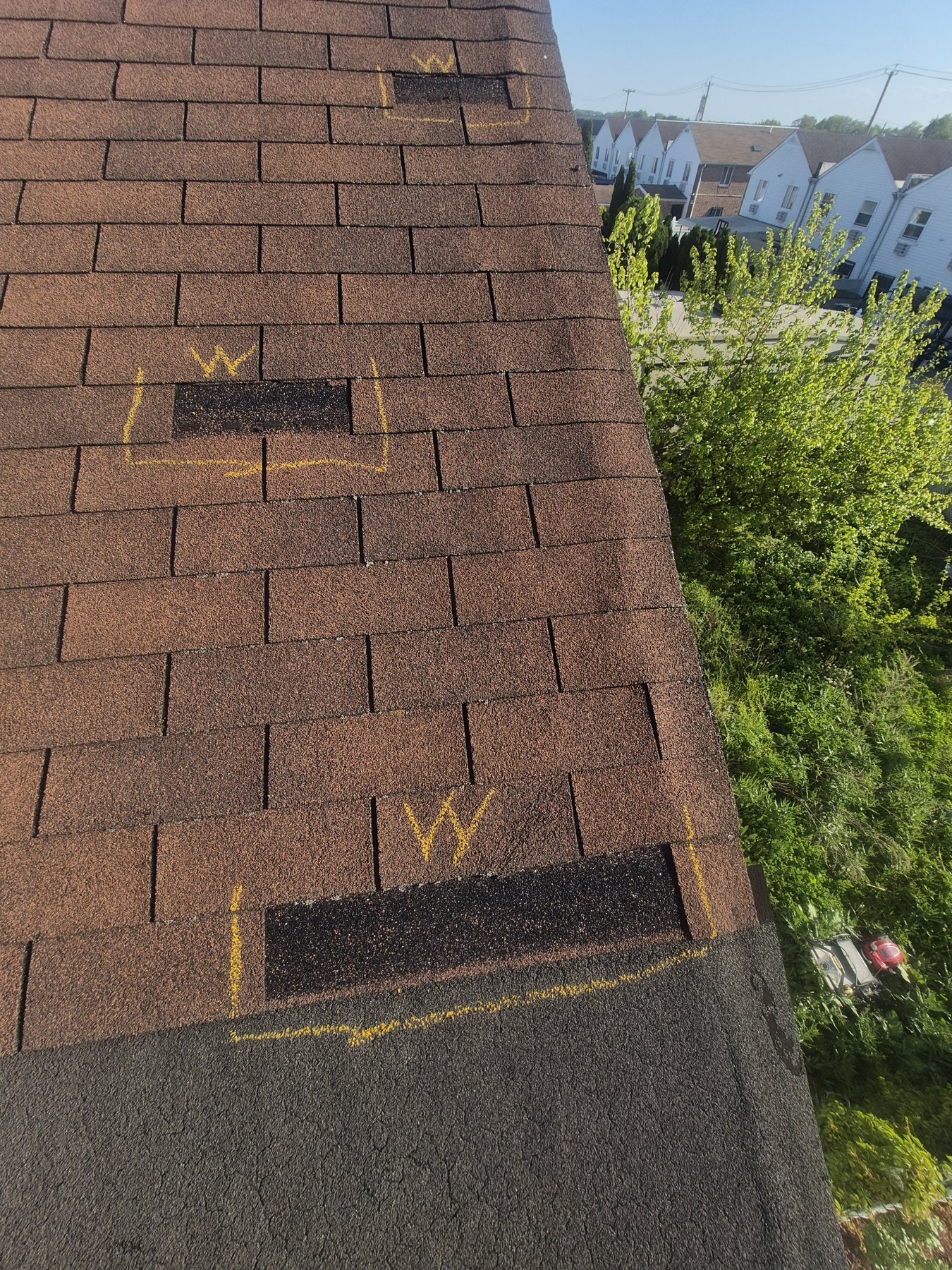
Yellow chalk outlines identify areas being documented on this roof. Inspection markings help locate observations; they do not by themselves establish the cause of damage or insurance coverage.
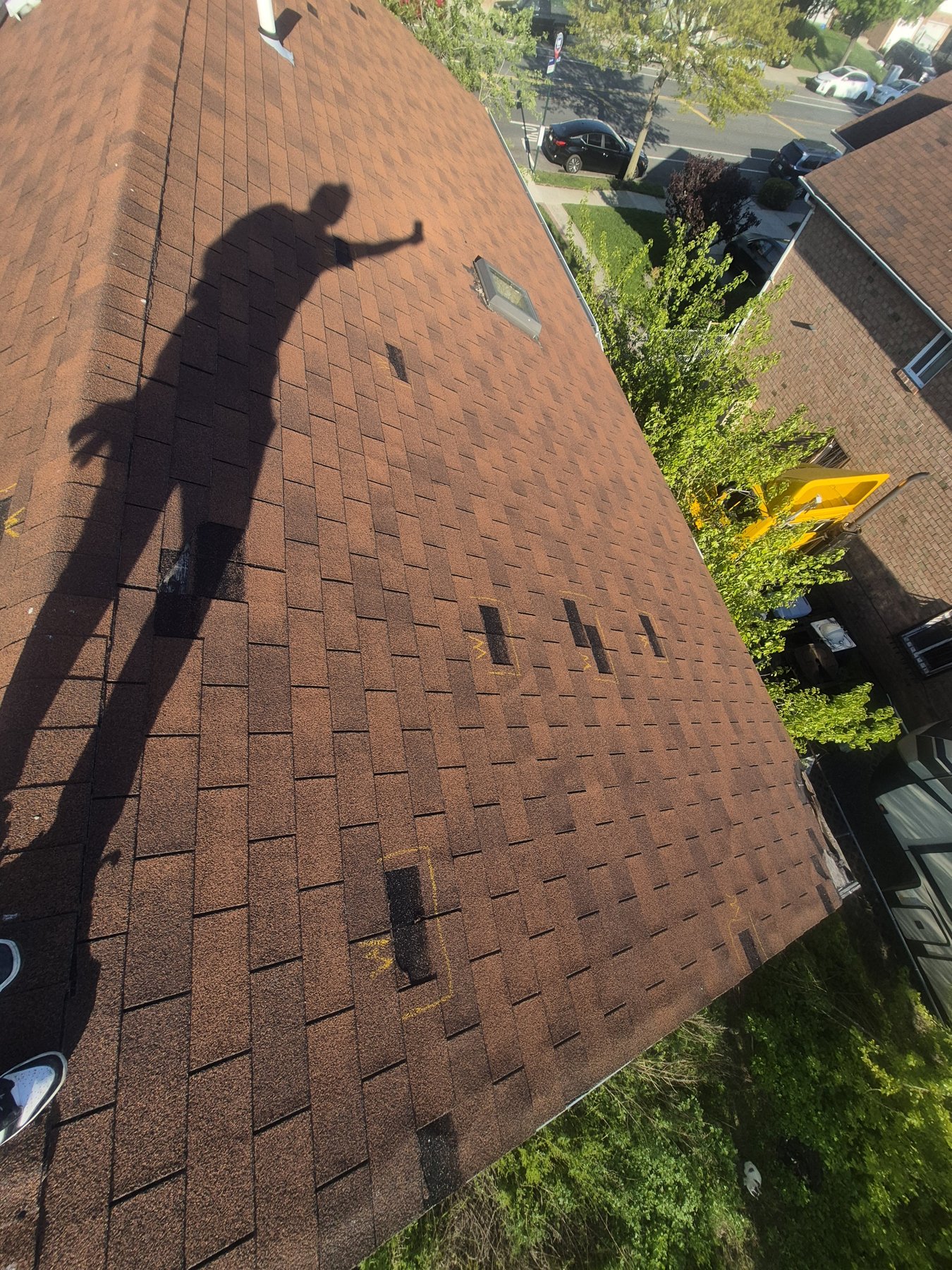
A wider photograph connects individual observations to their location on the roof, including nearby features such as the skylight. This helps organize the inspection record.
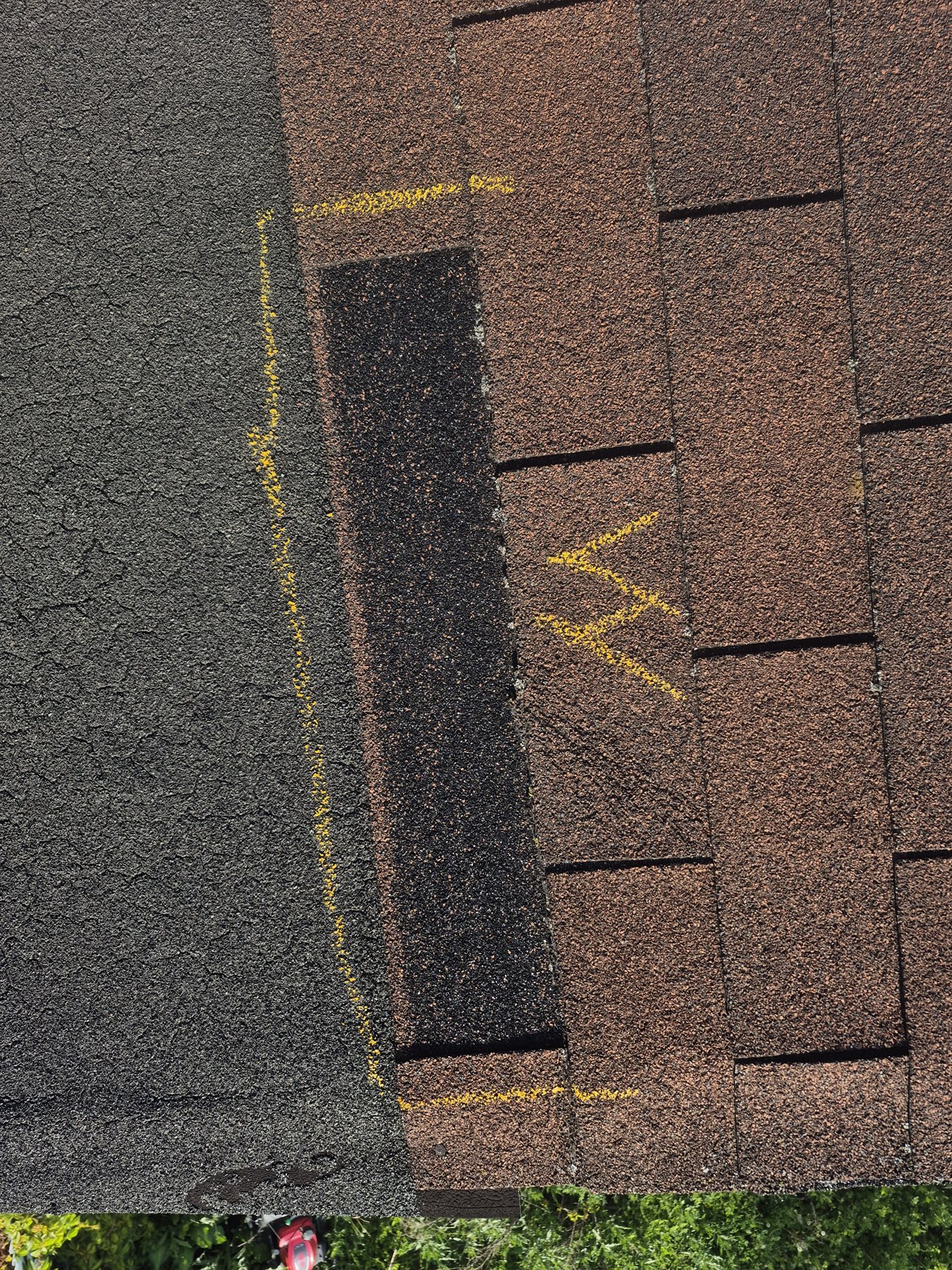
This close-up records an outlined area where a shingle tab is missing. Detailed photos complement the wider views when preparing documentation for the homeowner and insurer.
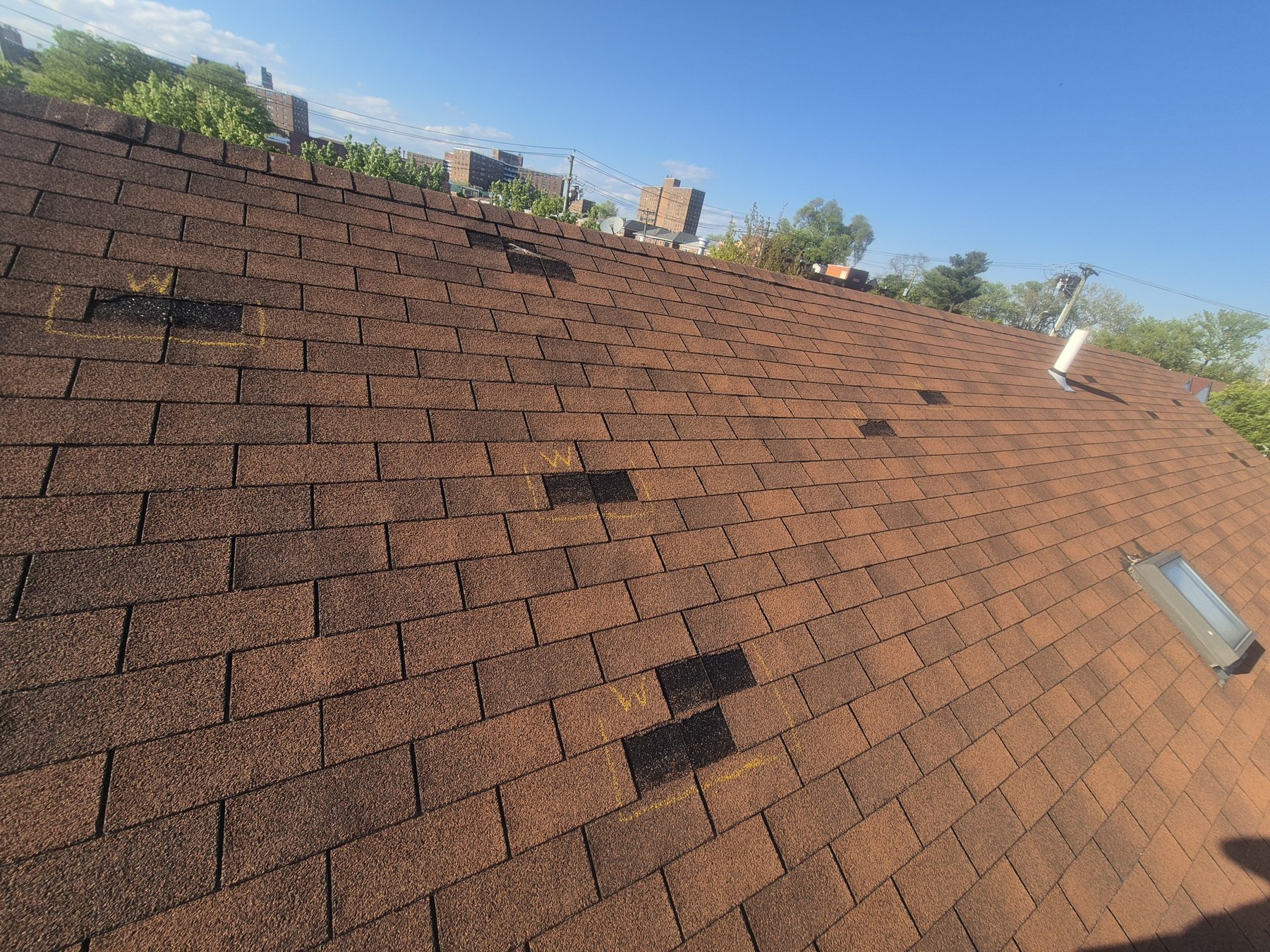
Several missing sections are visible across this slope. A professional assessment helps determine the repair scope and document the condition before work begins.
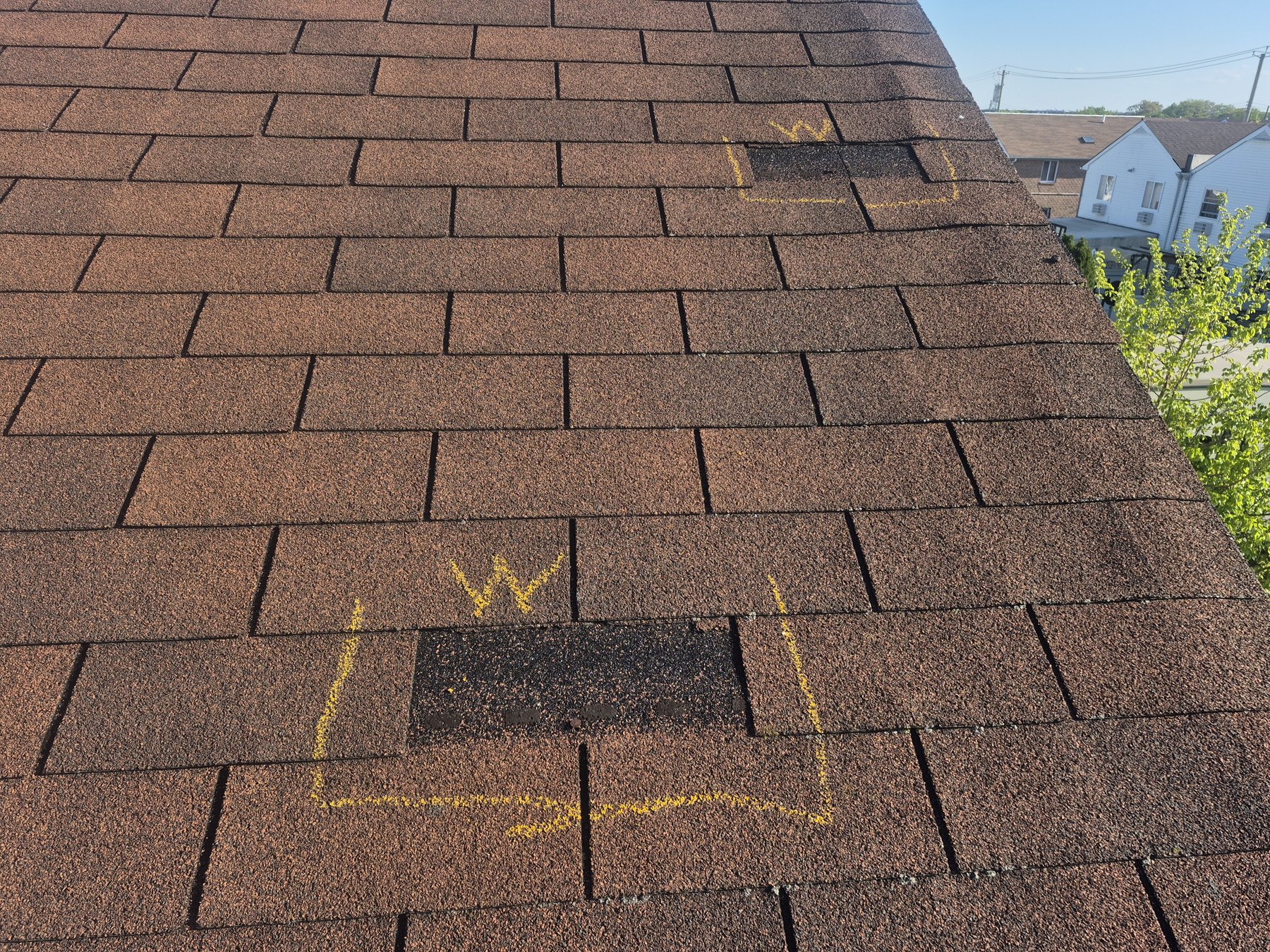
Marked close-ups help the homeowner identify the areas discussed in the inspection findings. Keep the original photographs with the inspection notes, estimates and repair receipts.
EMERGENCY ASSISTANCE · INSURANCE CLAIM SUPPORT
Do not leave an exposed roof unprotected while waiting for an adjuster. ST Roofing provides temporary roof protection and documentation to help limit further damage while you coordinate your claim. These photos show stages of the work, including exposed decking and tarps being handled; they do not show a fully secured, completed covering.
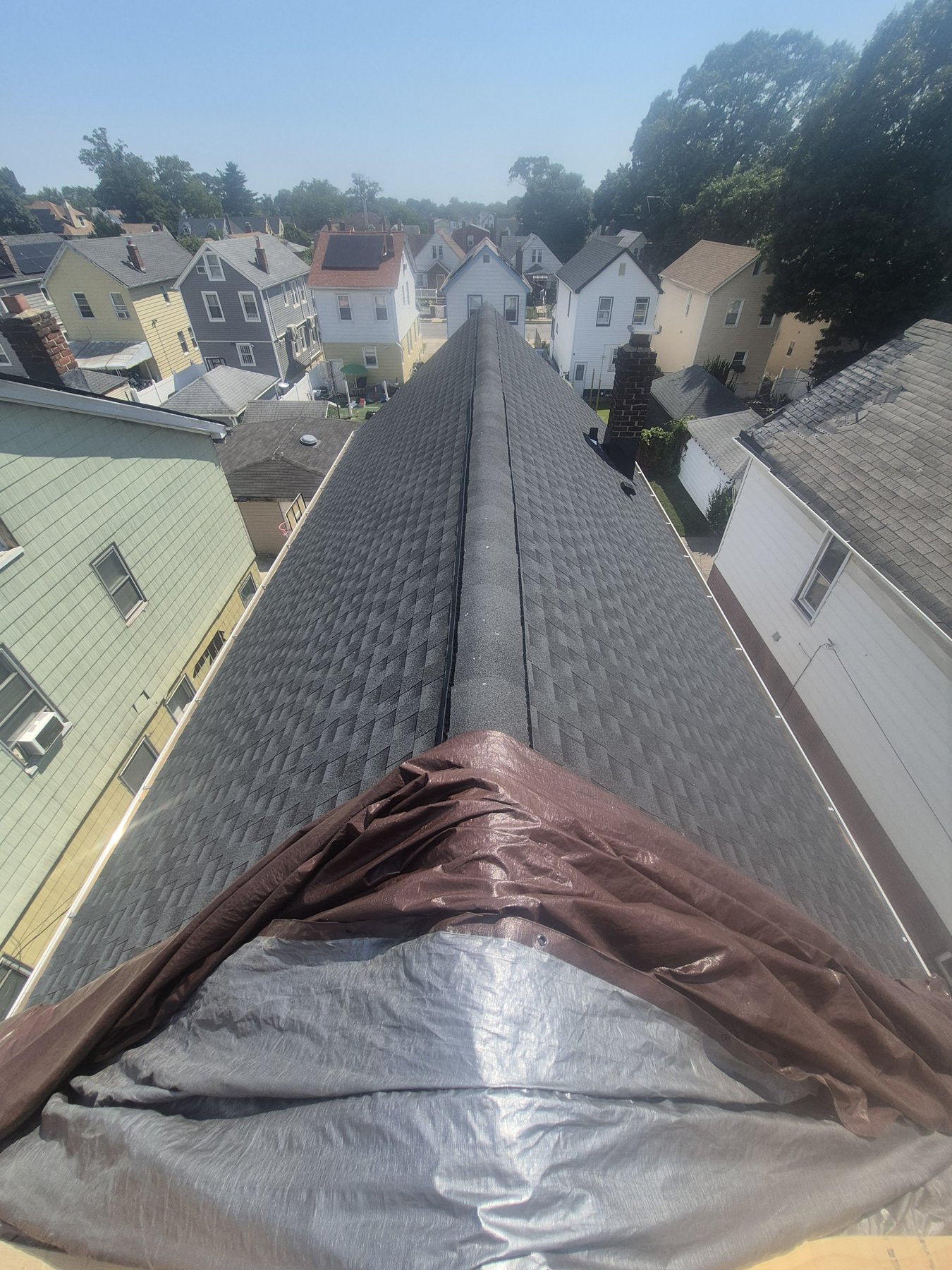
A tarp can help limit additional rainwater entry while the insurance inspection and repair plan are arranged. This photo documents work in progress, not a finished roof repair.
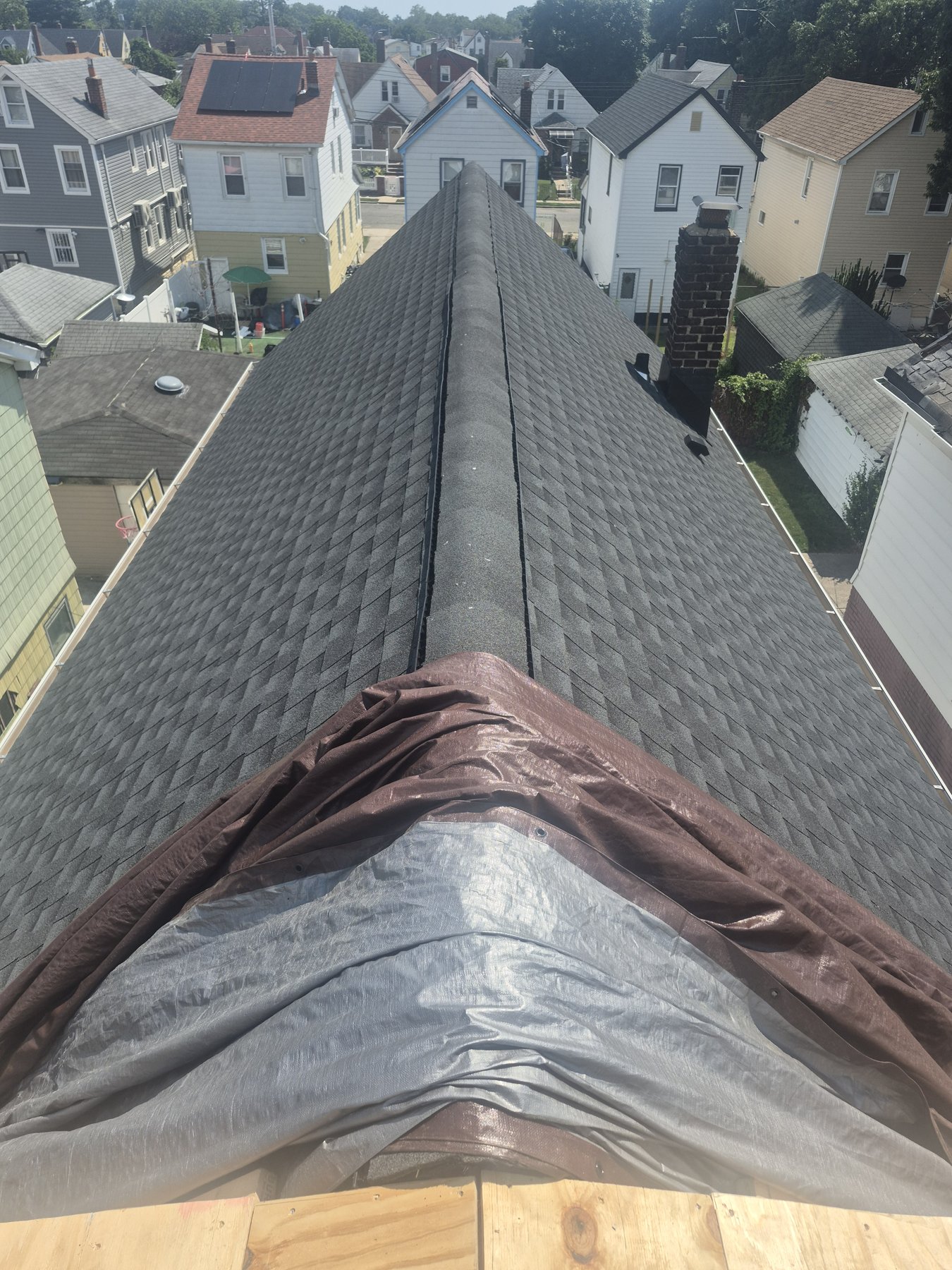
Exposed roof areas need prompt attention. Temporary covering helps protect the interior while the next steps are coordinated. A tarp is a short-term measure and needs professional assessment and monitoring.
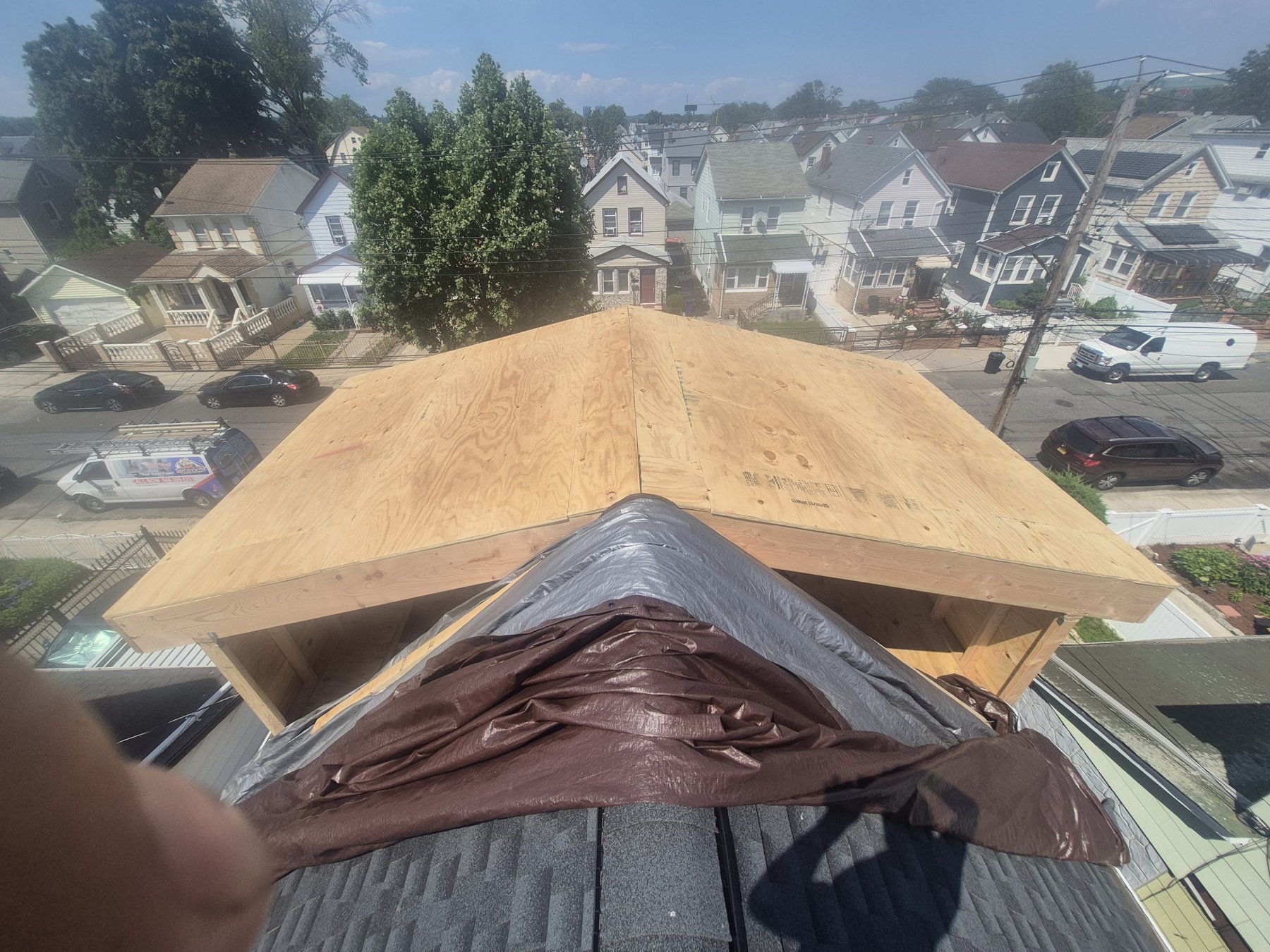
Photographs of the roof, exposed decking and temporary work help create a record for the claim. Keep dated photos from before, during and after emergency work whenever it is safe to obtain them.
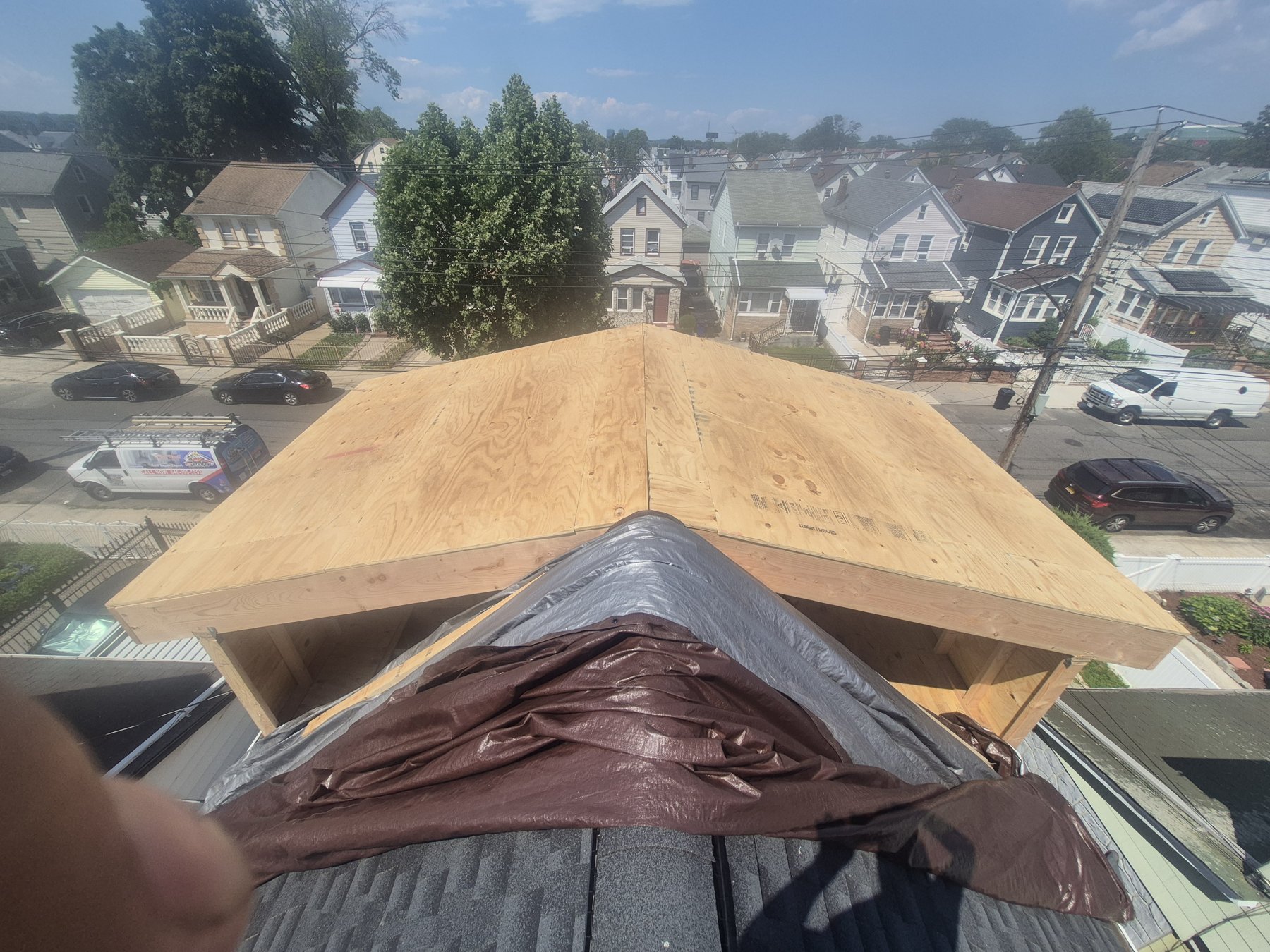
Save emergency-work invoices and receipts, and notify your insurer promptly. Coordinate permanent repairs with the insurer’s inspection process. Coverage and reimbursement depend on the policy and the insurer’s review.
Arrange only the immediate work needed to protect the property, document the condition and contact your insurer. Let a roofing professional assess safe access and the appropriate temporary covering. A tarp does not replace permanent repairs or guarantee claim approval.
Homeowner guidance: New York Department of Financial Services →
Request emergency roof assistance →INSURANCE CLAIM DOCUMENTATION
This photo series follows roof observations, interior conditions and temporary covering work for an insurance claim. ST Roofing provides photographs and roofing findings that homeowners can share with their insurer. Documentation supports the review; the insurer determines coverage under the policy.
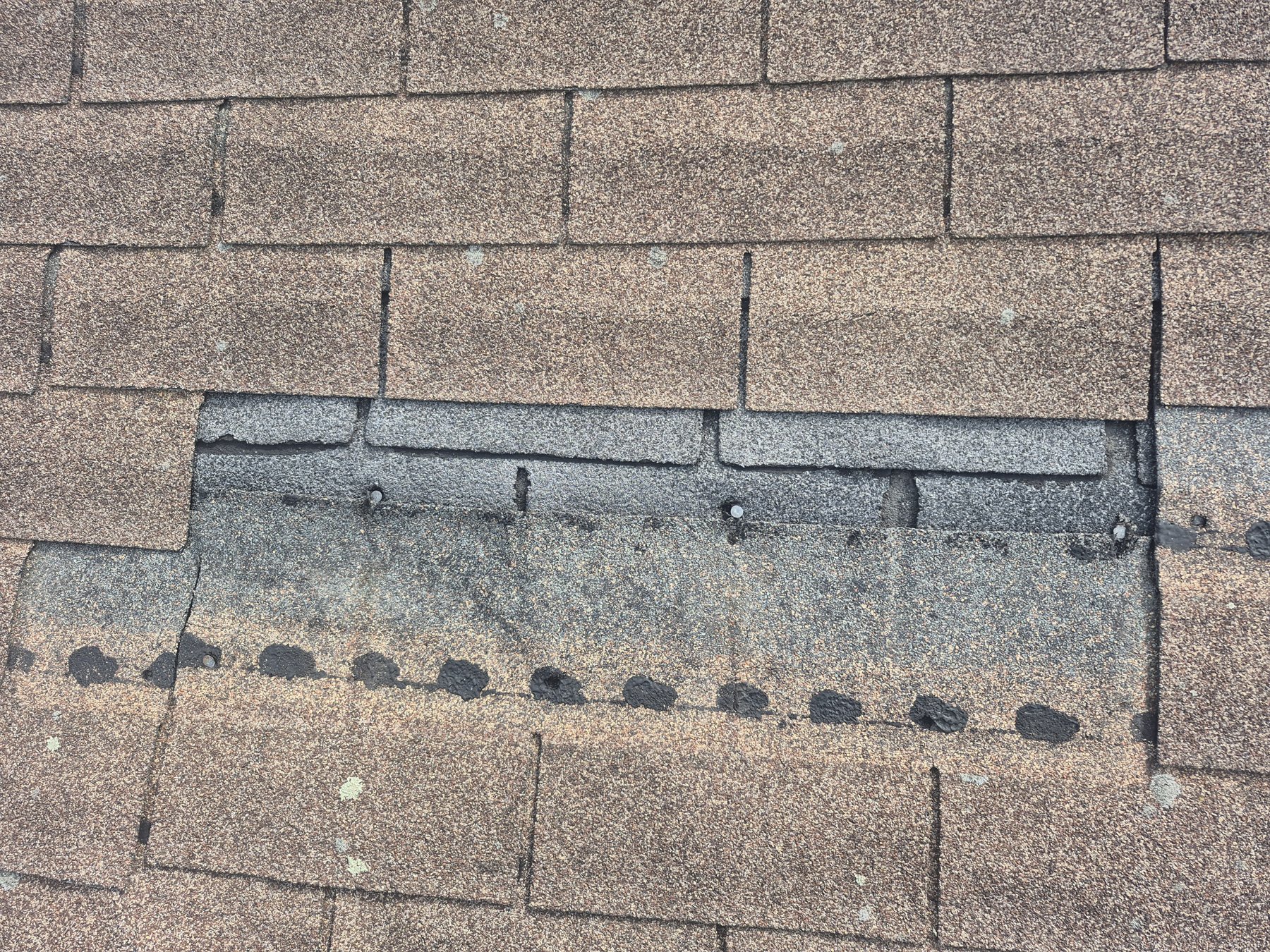
The inspection record begins with photographs of missing shingle sections, exposed fasteners and the surrounding material. These images describe the visible condition before temporary work.
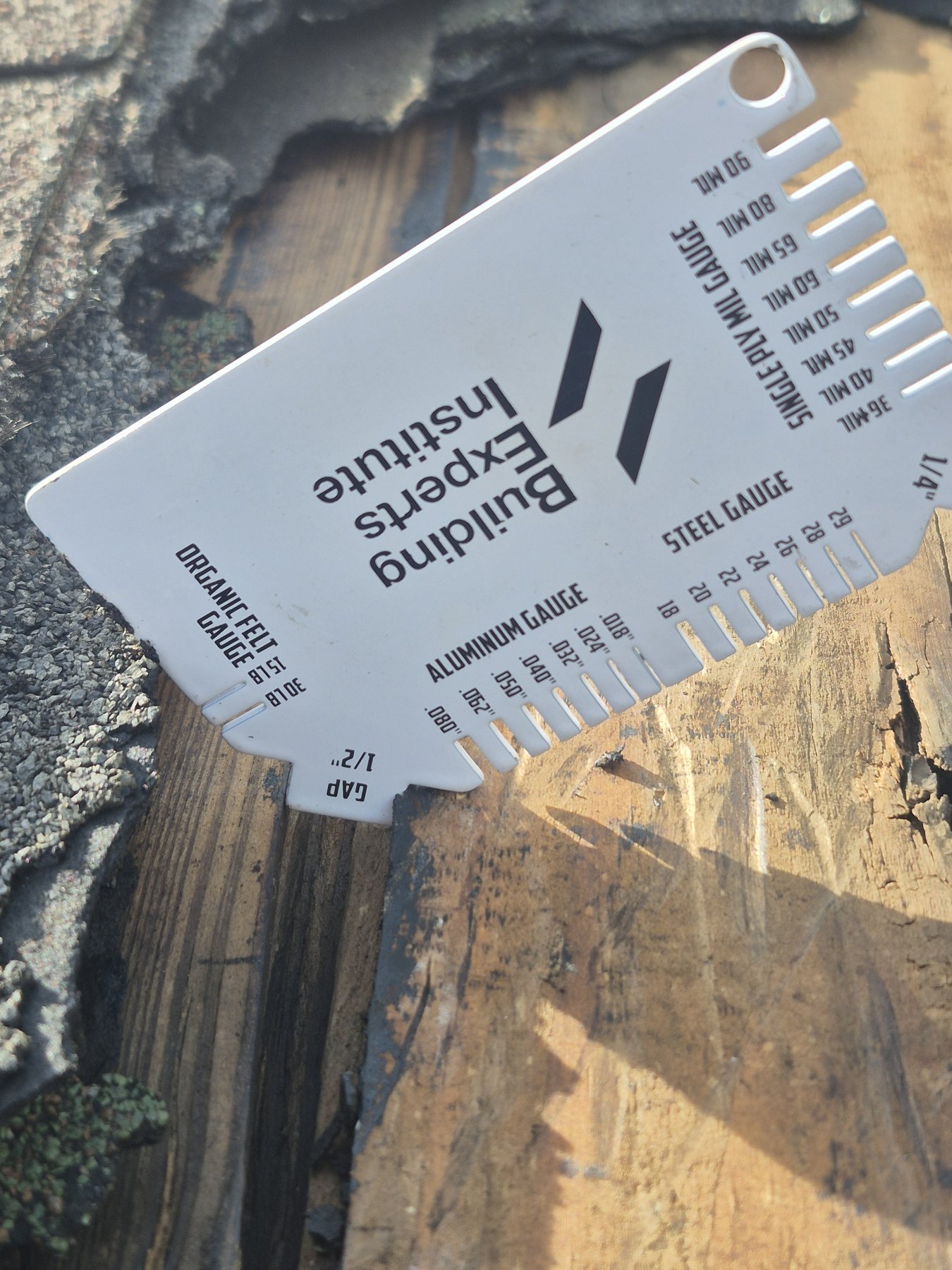
A reference gauge is photographed beside the exposed wood decking. Close-up records help explain what was observed; exact measurements must be recorded separately in the inspection notes.
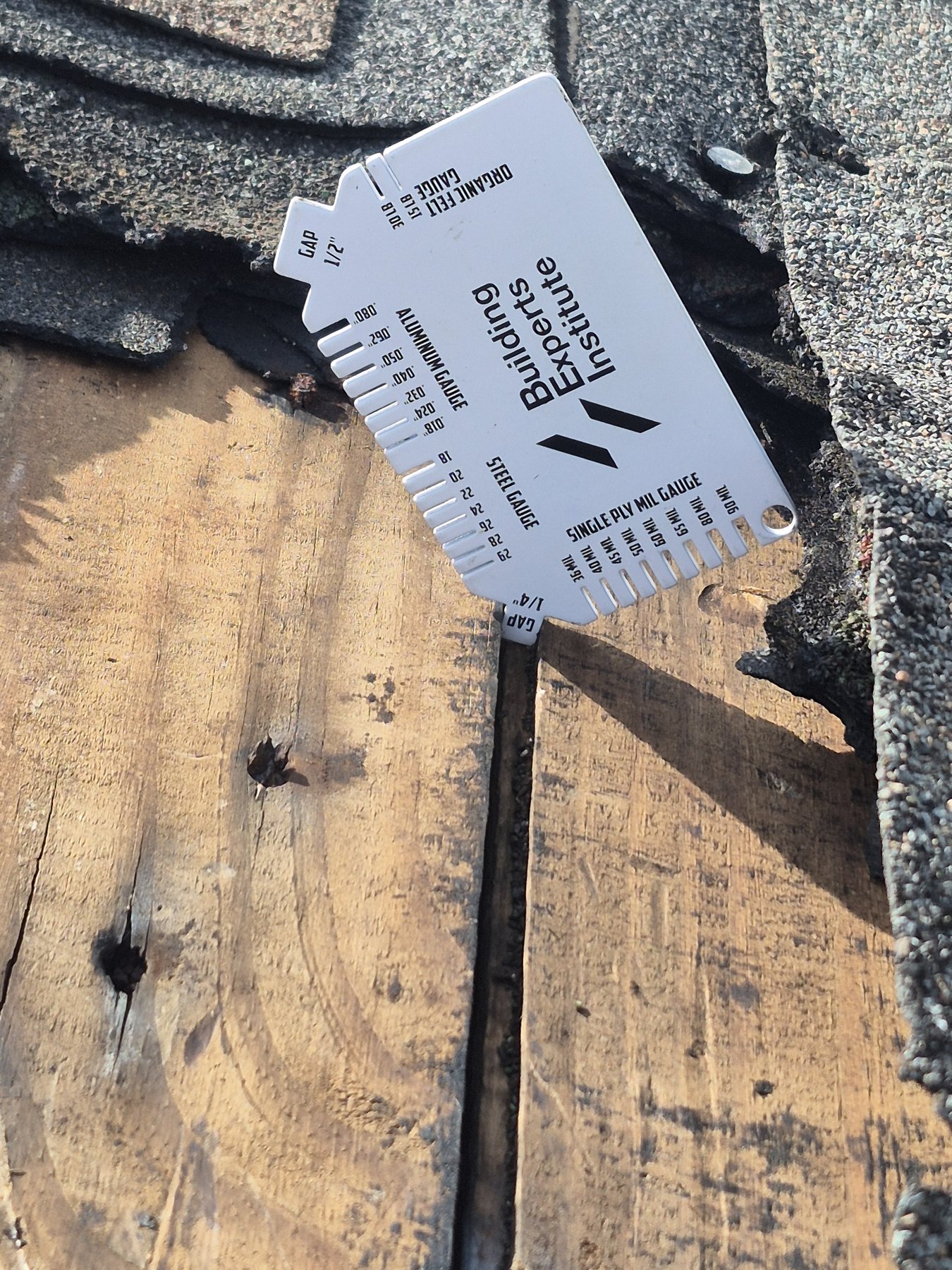
Another angle shows the decking joint and surrounding roofing layers. Multiple views help put the close-up observations in context without relying on a single photograph.
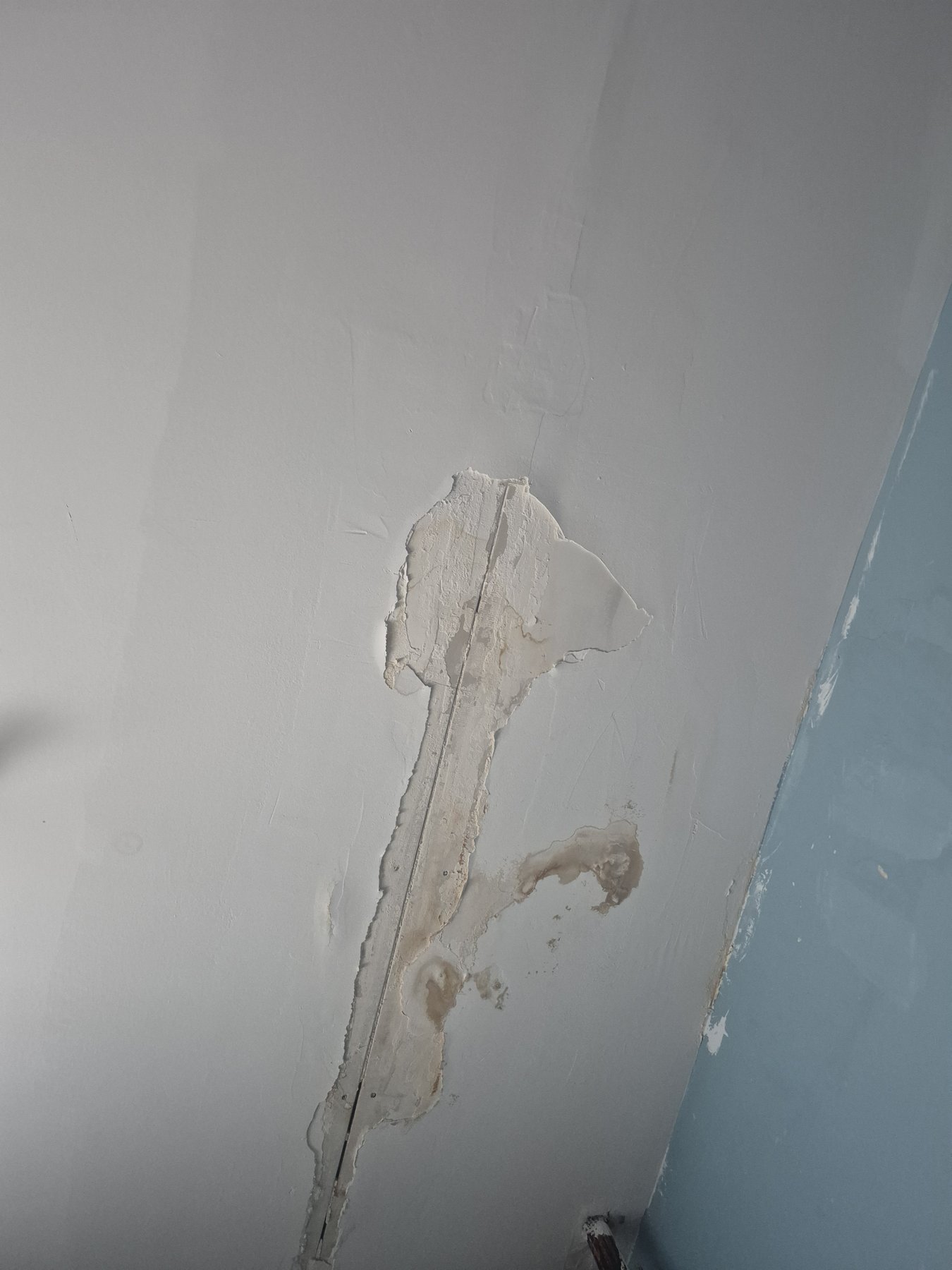
This photo records ceiling staining and peeling finish. Interior observations can be included alongside roof photographs; the source and extent of moisture require assessment.
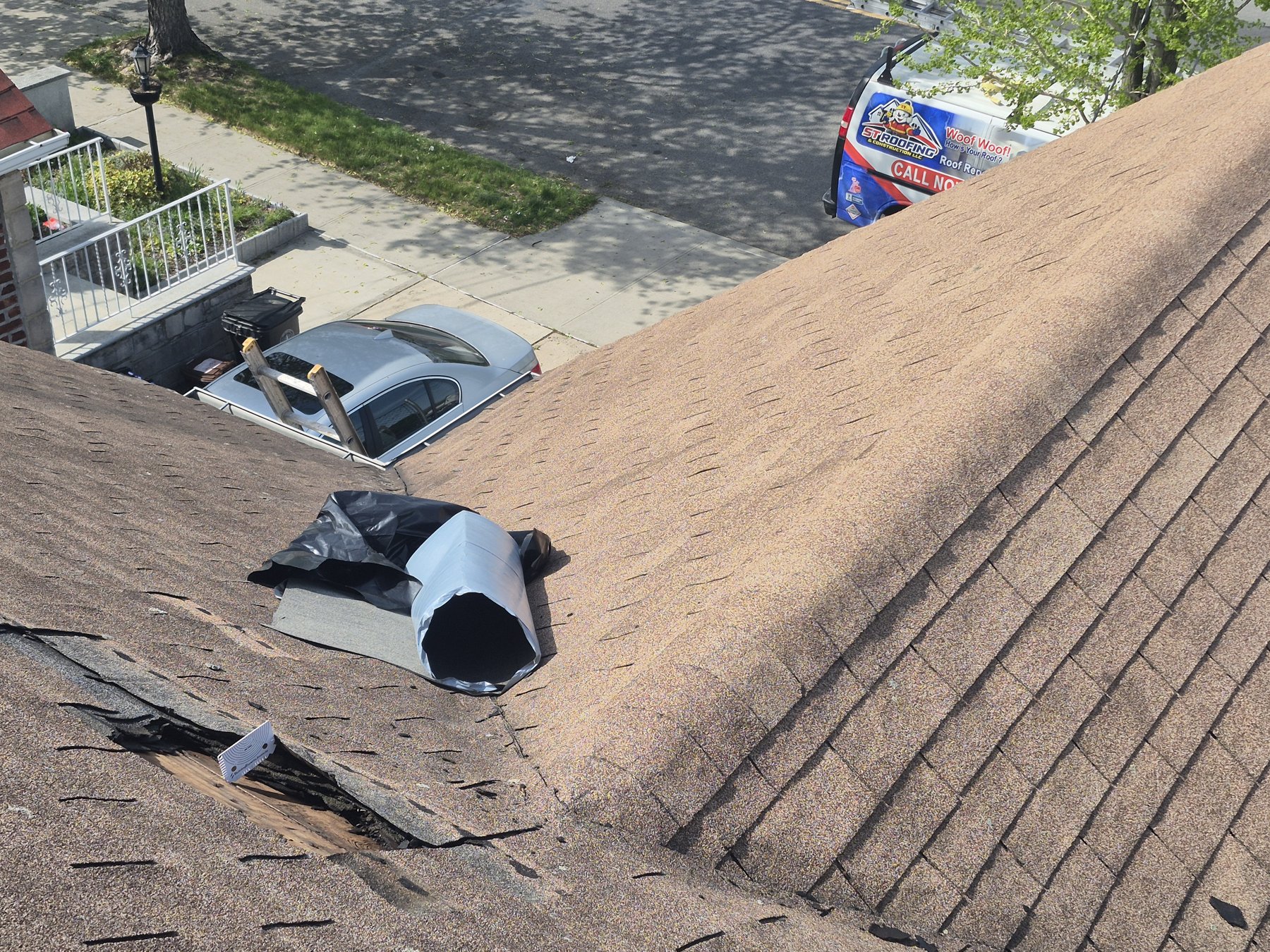
This view shows exposed roofing and covering materials during the work. Photographing this stage helps distinguish the observed condition from the temporary measures taken afterward.
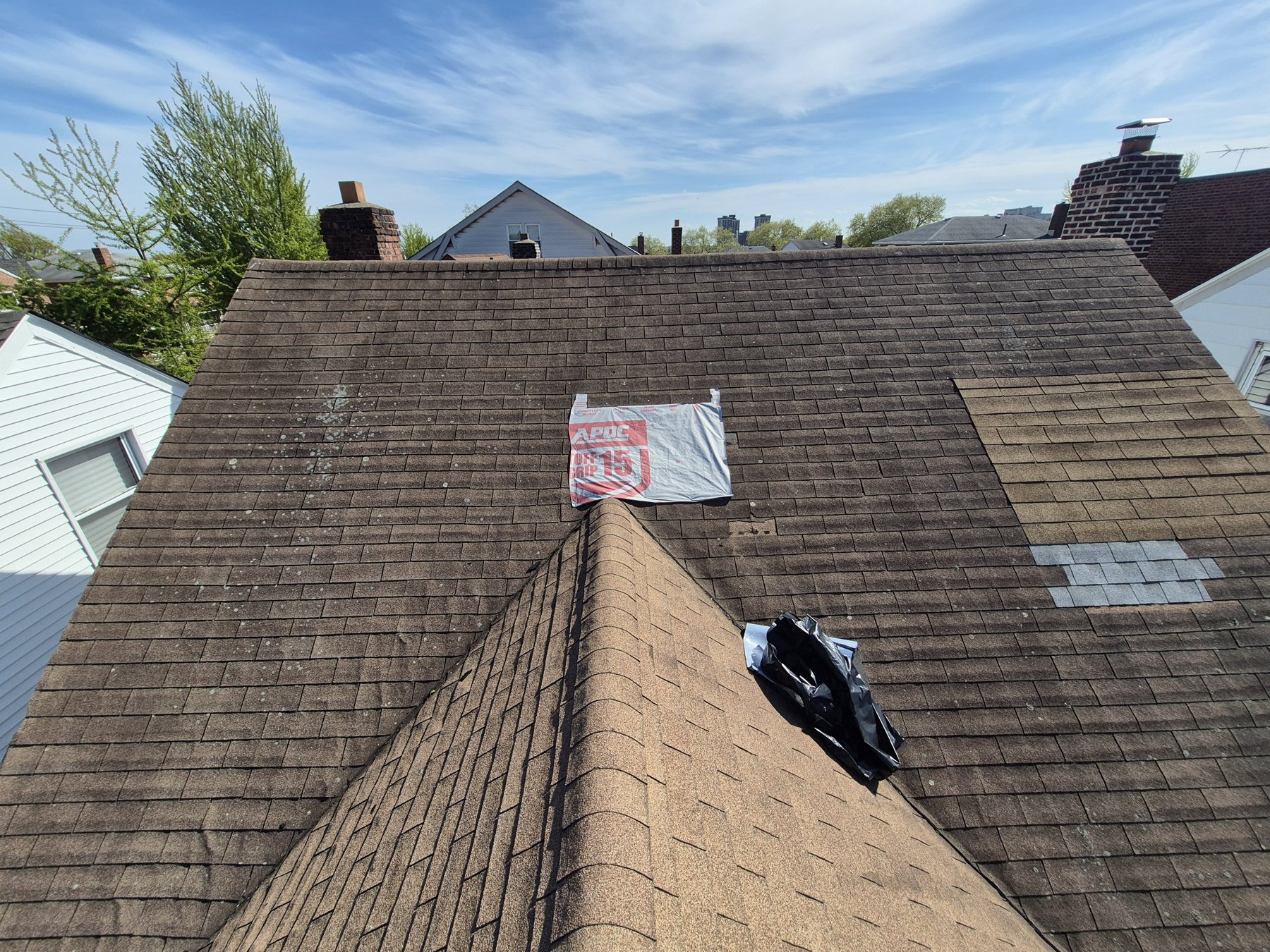
The wider view shows a localized temporary covering on the roof. It documents a protective measure during the claim process, rather than a completed permanent roof replacement.
Contact ST Roofing to arrange an inspection and discuss temporary protection. Keep the original photos, inspection notes and receipts together for your claim.
Request claim documentation →COMPLETED INSURANCE PROJECT · BRONX
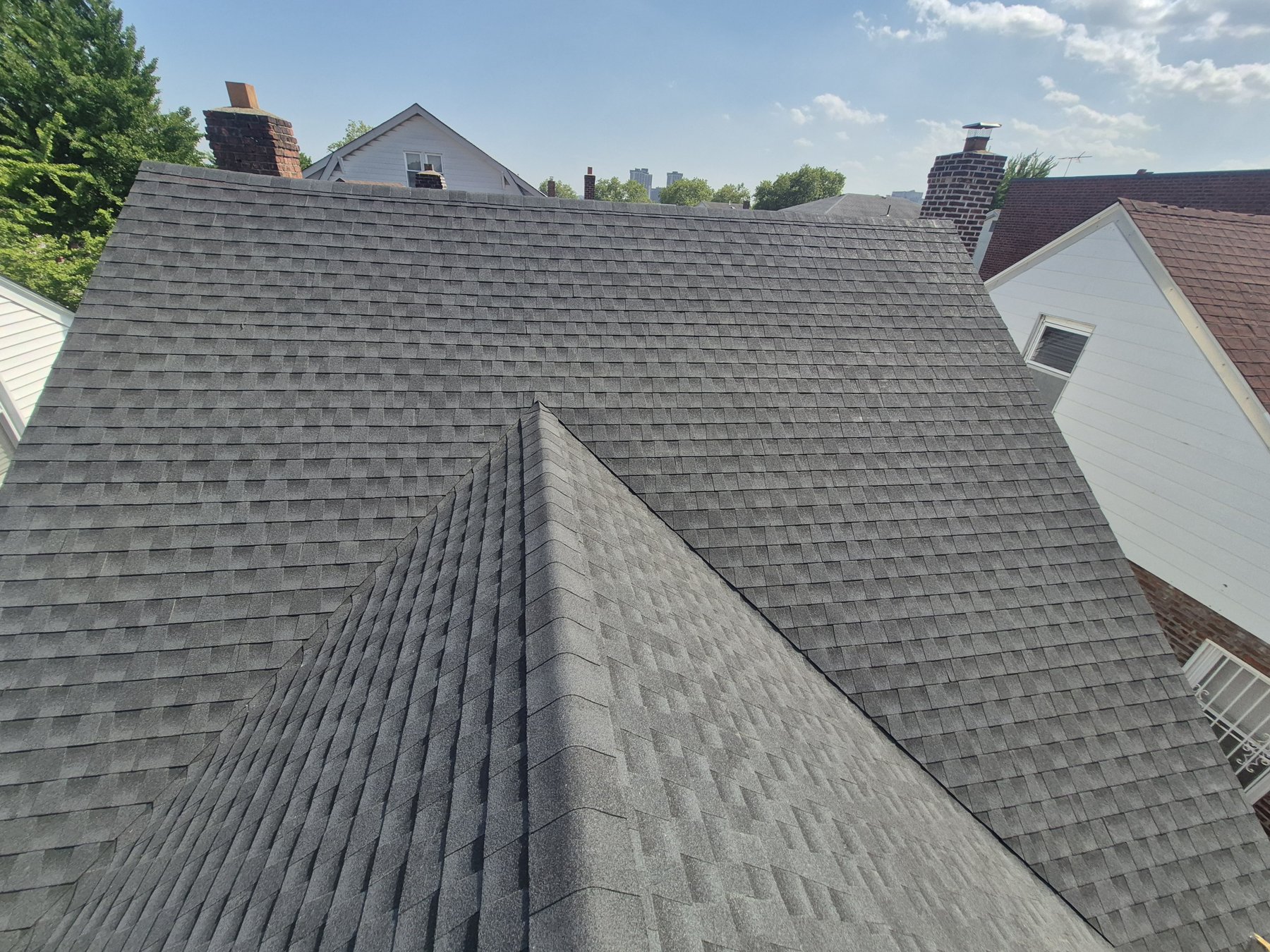
A roof replacement paid through an insurance claim, with 17 photos documenting preparation, decking, installation and the finished roof.
Most homeowner's insurance policies cover roof damage caused by sudden, accidental events like storms, wind, or fallen trees. Damage from lack of maintenance or normal wear and tear is typically not covered. Your policy details determine coverage - we can help you understand what's covered.
The timeline varies depending on the complexity of the claim and your insurance company's processes. Some claims are approved in a few weeks, while more complex ones may take longer. We work to make the process as smooth and quick as possible.
If your claim is denied, we can help you understand the denial reason and explore options for appeal. Sometimes additional documentation or a re-inspection can lead to approval. We're experienced in dealing with claim disputes.
This depends on your policy's deductible and coverage. Typically, you'll pay your deductible upfront, and the insurance company pays the rest directly to the contractor. We can explain the financial process during our consultation.